A diabetes diagnosis is not a life sentence of boring food.
Whether you were diagnosed last week or have been managing for years, the aim is the same — steadier numbers through the day, without a joyless list of things you're no longer allowed. We build low-GI eating around the food you already like.
If any of this sounds like you
Newly diagnosed
You've just been told you're diabetic or pre-diabetic and you've been handed a pamphlet and very little else.
Numbers all over the place
You test, and the readings swing about without an obvious reason. You'd like to understand what's actually driving them.
Tired of being told 'no sugar'
You've had the two-word version of dietary advice and it hasn't got you very far.
On medication already
You want eating that works with your treatment, not something that quietly undermines it.
Worried about what's ahead
You've seen what poorly-controlled diabetes does to people in your family and you'd rather not follow them.
You still want to enjoy food
Birthdays, Sunday lunch and a slice of cake shouldn't be off the table for the rest of your life.
Carbohydrate is the lever. Timing is the trick.
Most people arrive knowing they should cut sugar, and stop there. But bread, rice, potatoes, fruit juice and a surprising number of “healthy” cereals move blood sugar too — often more than the biscuit everyone worries about.
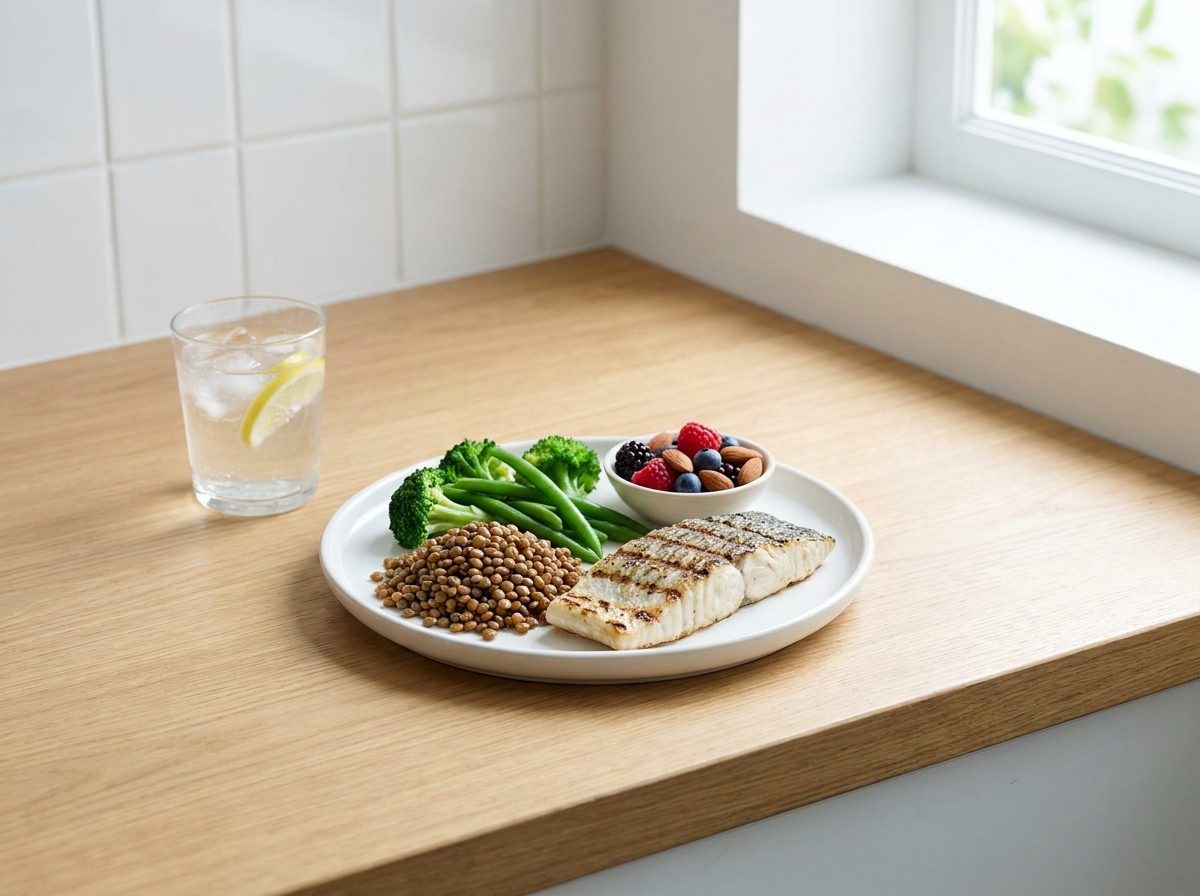
So we work on three things: which carbohydrates you choose, how much of each lands on the plate, and when you eat them across the day. Pair them properly with protein, fat and fibre and the same food produces a far flatter, steadier response.
None of that requires counting anything. We work in portions — what your plate should look like — which is a skill you can still use at a restaurant or at somebody else's table.
Four things that make the difference
Low-GI meal structure
A clear plate model for breakfast, lunch and supper so every meal is built the same reliable way, whatever's in the fridge.
Carb awareness, not carb fear
You learn which foods lift your sugar and by roughly how much — so you can make an informed choice rather than an anxious guess.
Works with your medication
Your plan is built around your treatment and your doctor's guidance, never in competition with it.
Daily accountability
Real-time check-ins through the free app, so a run of odd readings gets looked at this week rather than at your next six-month appointment.

What's included
- A plate model and portion guide calibrated to you
- Practical low-GI swaps for the foods you already eat
- Meal timing and spacing that steadies the day
- Guidance for eating out, celebrations and travel
- Daily check-ins and live chat through the free app
- Reviews as your readings, medication or weight change
Nobody sticks to a plan built out of the word ‘no’. We build yours out of what you actually eat.Lee Jaffe — Registered Dietitian, RD(SA)
Diabetes & Blood Sugar, answered
Can eating actually change my blood sugar that much?
For many people it makes a meaningful difference — the food you eat is the single biggest day-to-day influence on your readings. What that looks like for you specifically depends on your diagnosis, how long you've had it and your medication, which is exactly what we work through at the first consultation. This is nutritional care alongside your doctor's treatment, never a replacement for it.
Do I have to give up carbohydrates?
No. Carbohydrate is your body's main fuel and cutting it out entirely is neither necessary nor sustainable. We change the type, the portion and the timing rather than removing the food group — that's what produces steadier readings you can actually maintain.
Will I have to count carbs or measure everything?
No. We work in portions and plate structure rather than counting. It's easier to keep up, and unlike counting it still works when you're eating out, travelling or at a family lunch.
Can I still have fruit?
Yes. Whole fruit comes with fibre that slows the sugar release, and it brings vitamins and minerals worth having. Portion and pairing matter more than avoidance — fruit juice is the one we usually rethink, because it delivers the sugar without the fibre.
Do you work with my doctor?
I work alongside your medical team. You stay under your doctor's care for diagnosis, medication and monitoring, and I handle the eating side in a way that supports it. Bring your recent results to the first consultation if you have them.
Can I claim from my medical aid?
Consultations are billed privately and many clients claim back from their medical-aid savings using the invoice provided. Cover differs from scheme to scheme, so check yours — ask me and I'll tell you what to send them. Current fees are on the booking page.
Related services
Weight Loss & Management
A flexible, science-calculated plan with no banned foods — and the daily accountability that makes it stick.
Read moreCholesterol & Blood Pressure
High cholesterol or blood pressure usually arrives as a number on a page and a vague…
Read moreGut Health & IBS
Bloating, cramping and unpredictable digestion drive people to eliminate more and more until…
Read moreTake control of your blood sugar — with a dietitian alongside you.
Start with the free 2-minute assessment for a personalised next step, or book a free 15-minute discovery call. Online across South Africa, or in person in Sea Point.