Your results came back, and now somebody wants to talk about your diet.
High cholesterol or blood pressure usually arrives as a number on a page and a vague instruction to eat better. This is the specific version of that advice — what to change, in what order, and how to make it stick without living on steamed nothing.
If any of this sounds like you
Your bloods came back high
You've been told to make dietary changes and given very little detail about which ones.
Medication is on the table
Your doctor has raised it, and you'd like to give lifestyle a proper run first or alongside.
It runs in the family
You've watched relatives go through this and you'd rather intervene early than late.
You thought you ate well
Which makes the result more confusing than helpful, and you'd like to know what's actually driving it.
Salt is everywhere
You've been told to cut it and discovered most of it isn't coming from the salt cellar.
You want it sustainable
Not a two-week purge — something you can still be doing in five years.

It's less about what you cut out than what you're not yet putting in.
Advice in this area is almost always framed as removal — less fat, less salt, less everything. That's only half the picture, and it's the less effective half to lead with.
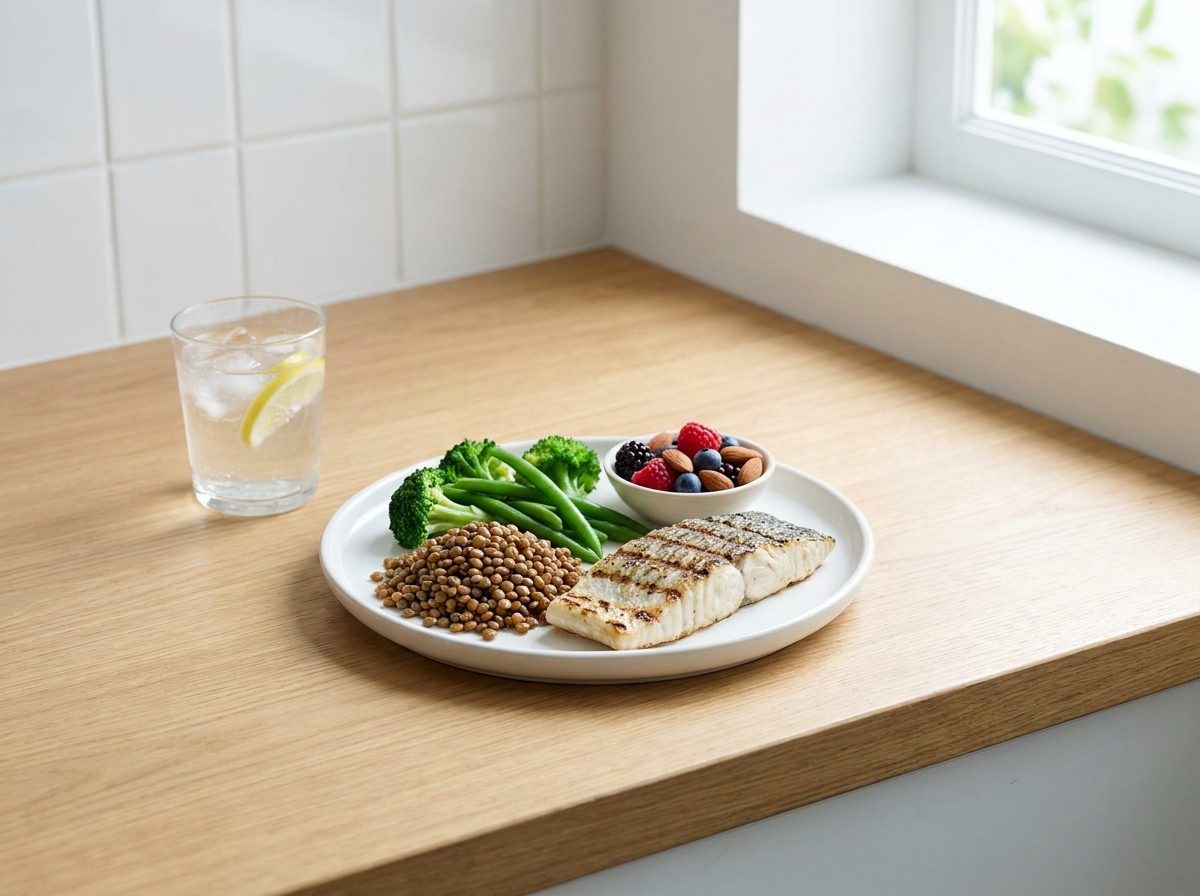
The bigger levers are usually additive: considerably more fibre, particularly the soluble kind found in oats, legumes, barley and fruit; better fats replacing the ones worth reducing rather than simply removed; and more vegetables and legumes displacing the highly-processed foods that carry most of the salt in a typical South African diet.
We also look at the practical drivers — how much of your food comes ready-made, what your usual takeaway looks like, what's in the cupboard on a bad week. That's where the sustainable change lives.
Four things that make the difference
Fibre first
A deliberate, practical increase in soluble fibre built into meals you already eat, rather than a supplement you'll forget.
Better fats, not no fats
Replacing rather than removing — because a low-fat diet full of refined carbohydrate rarely improves the picture.
Salt where it's actually hiding
Most dietary salt is already in the food before it reaches your kitchen. We find it and work around it.
Daily accountability
Real-time support through the app so the changes hold past the fortnight when motivation fades.

What's included
- A high-fibre eating plan built on food you'll actually eat
- Practical fat swaps rather than blanket restriction
- Label reading and lower-salt shopping guidance
- Portion and plate structure calibrated to you
- Guidance for takeaways, restaurants and busy weeks
- Daily check-ins and reviews as your results change
Nobody sustains a diet built on subtraction. We start with what goes in.Lee Jaffe — Registered Dietitian, RD(SA)
Cholesterol & Blood Pressure, answered
Can diet alone fix my cholesterol or blood pressure?
Dietary change makes a real contribution for many people, but how much it can achieve on its own depends on your numbers, your history and how much of it is genetic — familial cases in particular usually need medical treatment regardless of how well you eat. This is nutritional care alongside your doctor's, not instead of it, and the decision about medication stays with them.
Do I have to stop eating eggs, red meat or cheese?
Very unlikely to be a straight ban. The current picture is more nuanced than the blanket rules many of us grew up with, and it's the overall pattern of eating that moves the numbers rather than any single food. We'll look at frequency and portion rather than starting with a prohibition list.
How much salt am I allowed?
We'll set that against your readings and your doctor's guidance. The more useful realisation for most people is that the salt cellar is a small part of it — bread, processed meats, stock, sauces and ready-made food carry the bulk, which is why label reading does more than removing the shaker.
How long before anything changes?
Blood results respond to sustained dietary change over a period of weeks to months rather than days, and your doctor will usually want to re-test on their own schedule. I'd rather set your expectation properly at the consultation than promise you a timeline that doesn't hold.
I'm already on medication. Is this still worth doing?
Yes. Eating well alongside treatment supports what the medication is doing and addresses the parts it doesn't — weight, fibre, overall diet quality and the other risk factors that tend to travel together.
Can I claim from my medical aid?
Consultations are billed privately and many clients claim back from medical-aid savings using the invoice provided. Cover differs by scheme. Current fees are on the booking page.
Related services
Diabetes & Blood Sugar
Whether you were diagnosed last week or have been managing for years, the aim is the same —…
Read moreWeight Loss & Management
A flexible, science-calculated plan with no banned foods — and the daily accountability that makes it stick.
Read moreGut Health & IBS
Bloating, cramping and unpredictable digestion drive people to eliminate more and more until…
Read moreChange the numbers — with changes you can actually keep.
Start with the free 2-minute assessment for a personalised next step, or book a free 15-minute discovery call. Online across South Africa, or in person in Sea Point.